
The Singularity Tuesday Model: Analyzing Institutional Latency and ts8
The Singularity Tuesday Model defines the technological singularity as the specific mathematical point where AI development speed exceeds human institutional response time (campedersen.com). Rather th

The Pitch
The Singularity Tuesday Model defines the technological singularity as the specific mathematical point where AI development speed exceeds human institutional response time (campedersen.com). Rather than waiting for "true" AGI, author Cam Pedersen identifies this "ts8" threshold as the moment when organizational structures become permanently decoupled from the velocity of synthetic iteration.
Under the Hood
The model utilizes a composite of technical and economic metrics, including MMLU scores, tokens-per-dollar efficiency for Claude 4 and GPT-4o, and the percentage of code generated by Copilot (Source: campedersen.com). It incorporates verified data from the 2025 labor market, noting that while 1.1 million layoffs occurred, approximately 55,000 were explicitly tied to AI integration (Source: Challenger, Gray & Christmas Report 2025).
Pedersen, a former Uber software engineer, relies heavily on fitting a hyperbolic curve to the frequency of "emergence" papers appearing on arXiv. This approach suggests a vertical trajectory in research volume that will eventually paralyze traditional peer review and corporate adoption cycles. However, this methodological reliance on academic output is fragile; while arXiv submissions show hyperbolic tendencies, hardware efficiency and model performance currently maintain linear or exponential growth (UsedBy Dossier).
There are significant gaps in the public data regarding the weighting of these metrics. We don't know yet the specific calendar date identified as "The Tuesday" because the public methodology cuts off before the final timestamp (UsedBy Dossier). Additionally, the model risks becoming a self-fulfilling prophecy. Harvard Business Review recently confirmed that 2026 corporate restructuring is driven by AI potential and roadmaps rather than verified performance gains (Source: HBR Jan 29, 2026).
The technical risks include:
* Methodological fragility in hyperbolic curve fitting.
* Data noise from arXiv publication spikes.
* Anticipatory displacement causing economic instability before technical parity.
* Linear growth in cost-efficiency contradicting the hyperbolic claim.
* Epistemic takeover where belief in the model dictates market behavior.
Marcus's Take
Treat this model as a sophisticated risk visualization rather than a predictive tool for your roadmap. Pedersen is a high-reputation engineer, but fitting a hyperbolic curve to research papers is a classic case of finding a pole at the edge of a search grid. We are seeing real-world displacement, but it is currently fueled by CFOs reacting to AI potential roadmaps rather than a genuine collapse of human institutional capacity. Keep shipping on your current stack and ignore the Tuesday deadline until the MMLU benchmarks actually break the chart.
Ship clean code,
Marcus.
Marcus Webb - Senior Backend Analyst at UsedBy.ai
Related Articles
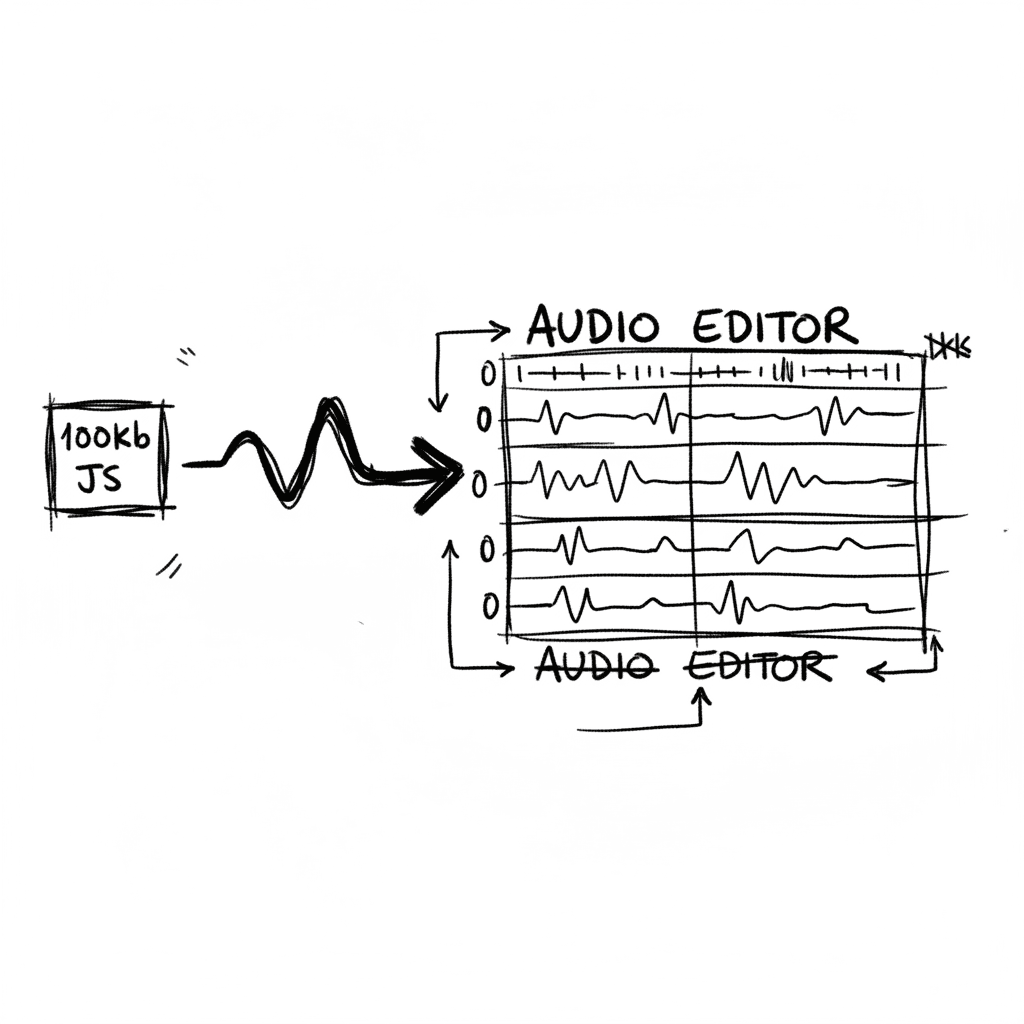
Audiomass: Multitrack Audio Editing via 100kb of Vanilla JavaScript
Audiomass is a browser-based, multitrack audio editor that operates entirely client-side with a remarkably small 100kb footprint (audiomass.co). It provides a workflow reminiscent of classic editors l
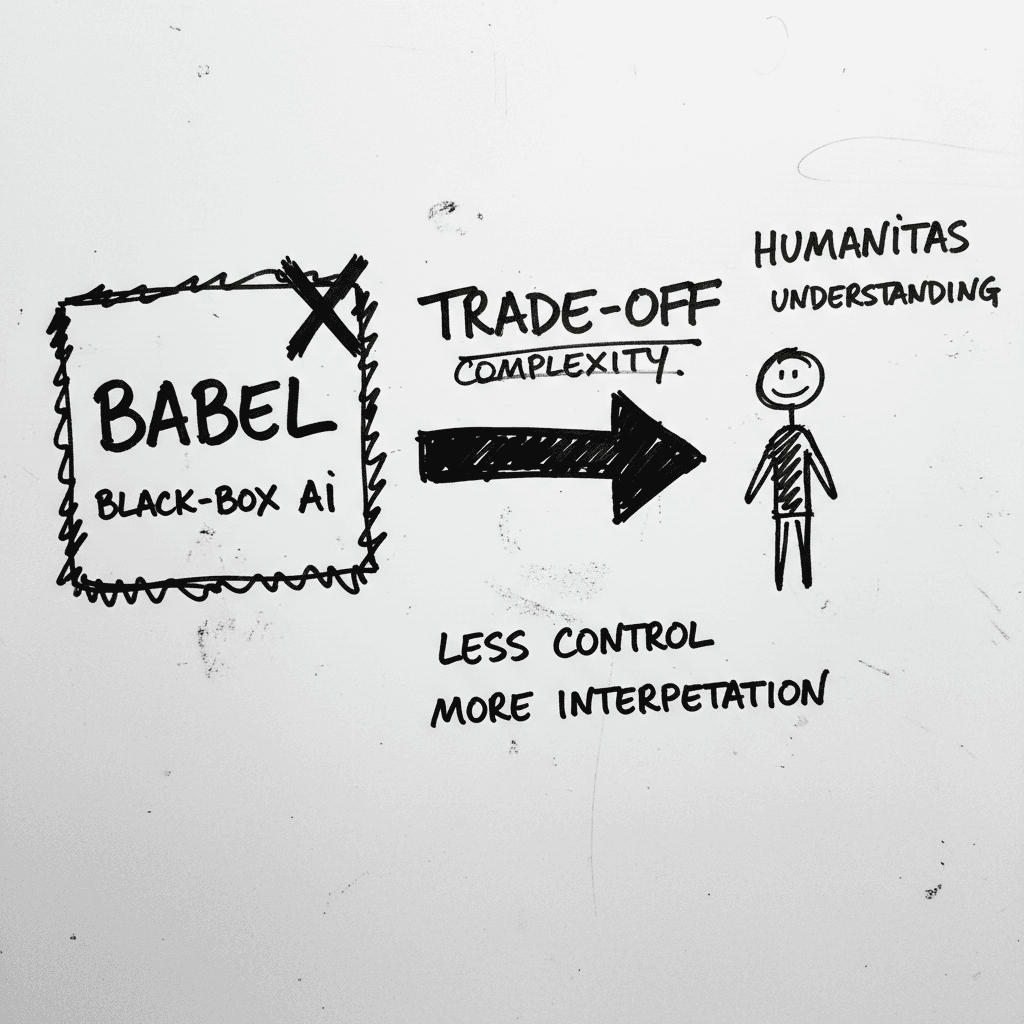
Magnifica Humanitas: The Vatican’s Framework for the GPT-5 Era
The document, signed May 15 and officially released today, was presented at the Vatican alongside Christopher Olah, co-founder of Anthropic and lead of its interpretability team (ncronline.org, Forbes
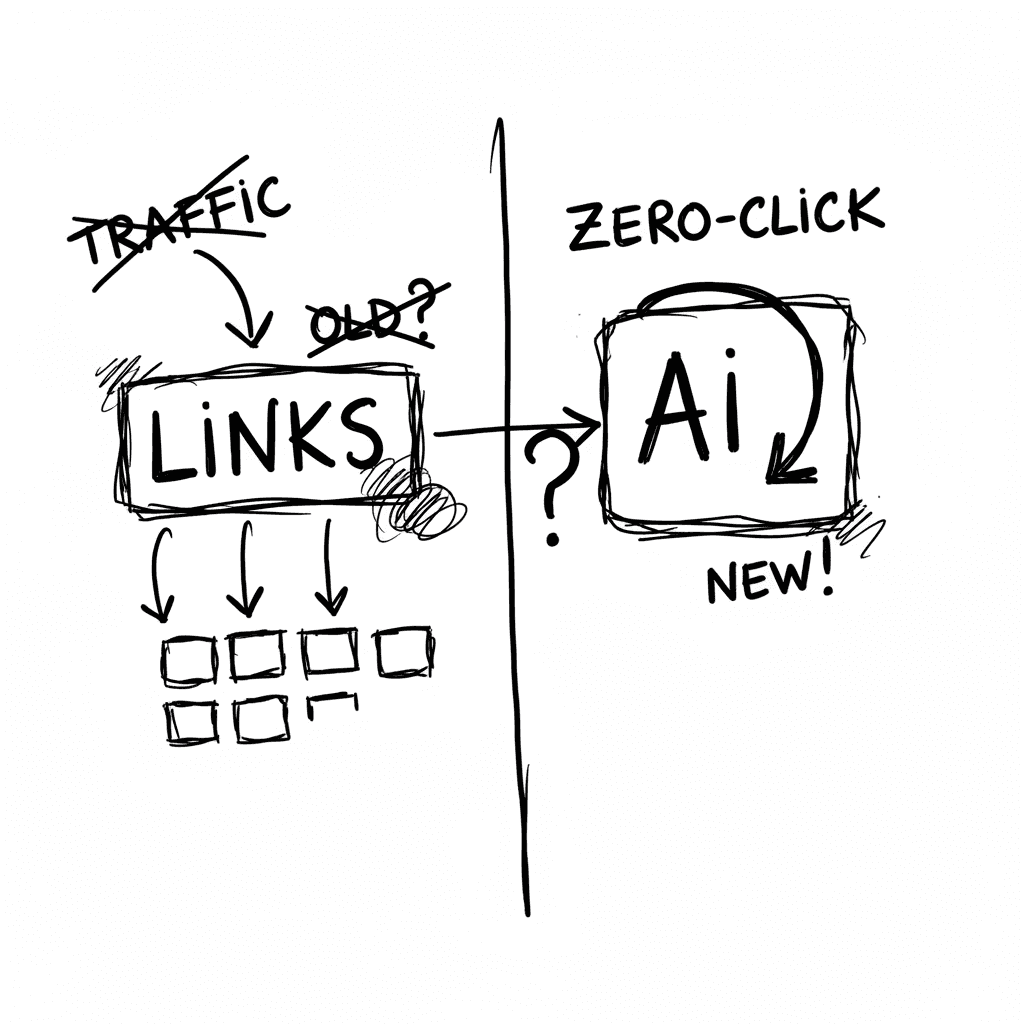
The Zero-Click Economy: Kagi Search vs. Google AI Mode
Google has effectively pivoted to an "answer engine" where Gemini 3.5 Flash provides conversational summaries, while Kagi remains the primary refuge for users seeking a human-centric, ad-free index. W
Stay Ahead of AI Adoption Trends
Get our latest reports and insights delivered to your inbox. No spam, just data.