

The use case: how Nvidia deploys LILT
NVIDIA uses LILT to refine translations generated by its own Nemotron speech-based translation model, adding adaptive multilingual AI, expert human review for critical content, and coverage of additional languages. Feedback from LILT flows back to NVIDIA to improve its translation model over time.
More reported results
Figures published in LILT’s case study. They are not independently measured by usedby.
the quality of NVIDIA’s translation model lifted substantially by 30% within a year
LILT’s infrastructure has supported NVIDIA through 12M+ words of translation in a single year
content is consistently turned around within a 6–12 hour window
In the customer’s words
We needed a partner who could help improve our translation model. That’s a different level of partnership. The ability to feed updates and improvements back into the model has been incredibly impactful.Other AI tools used by Nvidia
Other public relationships recorded on usedby.
 CodexConfirmed
 CursorConfirmed
 FactoryConfirmed
 GreptileConfirmed
 Hugging FaceConfirmed
 LlamaIndexConfirmed
LILT users in Semiconductors & Hardware
Companies in the same sector, with public evidence.
See all LILT customers

Go straight to the source
Based on LILT’s published case study. We check the public evidence; the results are reported by the vendor.
lilt.com- Last checked
- Nov 25, 2026
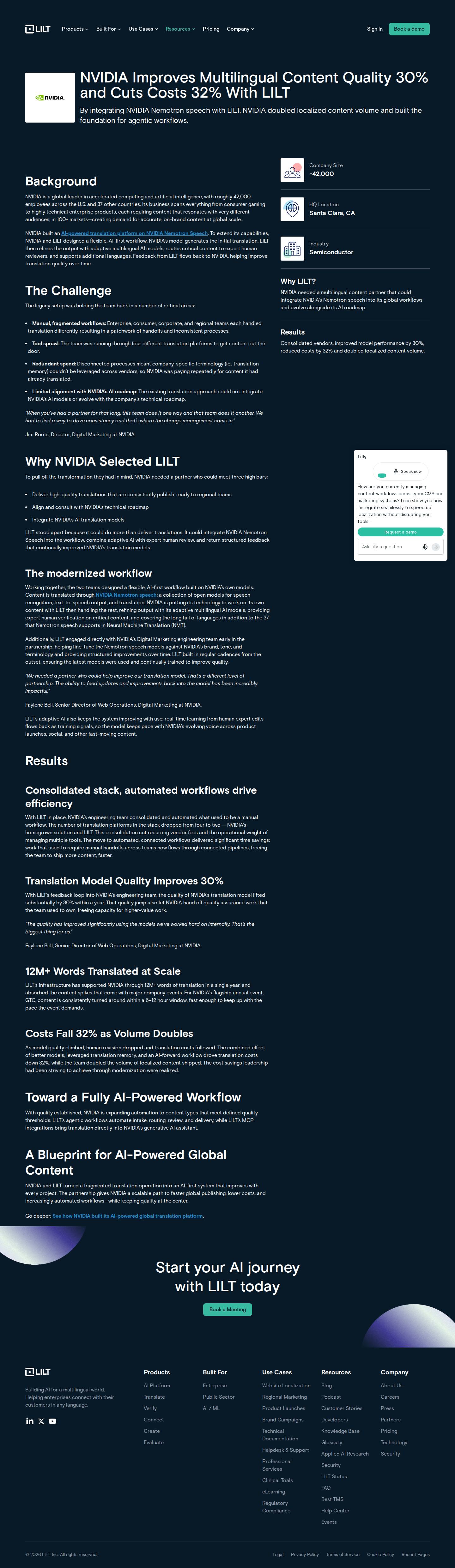 Open source capture
What the story claims, and what we checked
What we compared with the page.
- The figure: 32%Checked
Printed word for word on the page, near the name of Nvidia.
- The passage quoted aboveChecked
Copied word for word from the page, near the name of Nvidia.
- Nvidia uses LILTChecked
Confirmed line.
- The result itselfNot checked
We quote it; we did not measure it.
As model quality climbed, human revision dropped and translation costs followed. The combined effect of better models, leveraged translation memory, and an AI-forward workflow drove translation costs down 32%, while the team doubled the volume of localized content shipped.