

The use case: how Figma deploys Asana
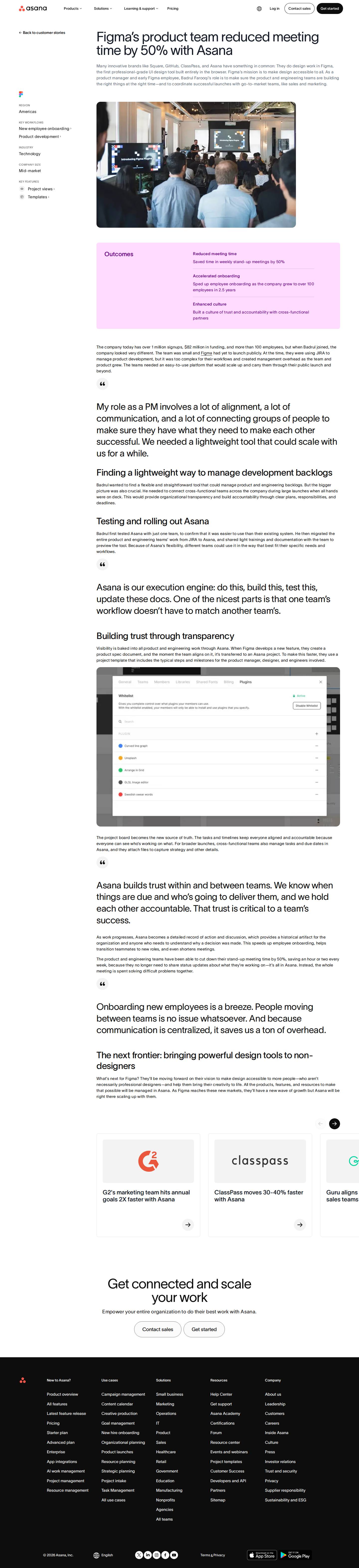
Figma's product and engineering teams migrated their product development work from JIRA to Asana to manage backlogs and feature projects. They use project templates and boards as a shared source of truth for tasks, owners, and deadlines, and cross-functional teams also coordinate launches there.
In the customer’s words
Asana builds trust within and between teams. We know when things are due and who’s going to deliver them, and we hold each other accountable. That trust is critical to a team’s success.Other AI tools used by Figma
Other public relationships recorded on usedby.
Explore Figma’s AI stack





Other companies using Asana
Customers across industries, with public evidence.
See all Asana customers





Go straight to the source
Based on Asana’s published case study. We check the public evidence; the results are reported by the vendor.
asana.com- Last checked
- Nov 13, 2026
 Open source capture
What the story claims, and what we checked
What we compared with the page.
- The figure: 50%Checked
Printed word for word on the page, near the name of Figma.
- The passage quoted aboveChecked
Copied word for word from the page, near the name of Figma.
- Figma uses AsanaChecked
Confirmed line.
- The result itselfNot checked
We quote it; we did not measure it.
The product and engineering teams have been able to cut down their stand-up meeting time by 50%, saving an hour or two every week, because they no longer need to share status updates about what they’re working on—it’s all in Asana.