

The use case: how Palo Alto Networks deploys Zapier
A solutions architect built AI Zap workflows connected to Slack so employees can request demo accounts, login codes, license resets and access approvals in plain language. The workflows interpret the requests, provision accounts across multiple systems, assign licenses, and route access approvals back to the channel.
More reported results
Figures published in Zapier’s case study. They are not independently measured by usedby.
3,000+ internal users served.
Stas A/B tested reply styles — personalized bot responses cut follow-up questions by 20%.
In the customer’s words
We’re literally saving one FTE for the company. So it’s $150,000 a year, pretax.Other AI tools used by Palo Alto Networks
Other public relationships recorded on usedby.
 ClaudeConfirmed
 GeminiConfirmed
 ZoomInfoConfirmed
 BackstoryObserved
 ConcourseObserved
 Hugging FaceObserved
Zapier users in Cybersecurity
Companies in the same sector, with public evidence.
See all Zapier customers

Go straight to the source
Based on Zapier’s published case study. We check the public evidence; the results are reported by the vendor.
zapier.com- Last checked
- Nov 5, 2026
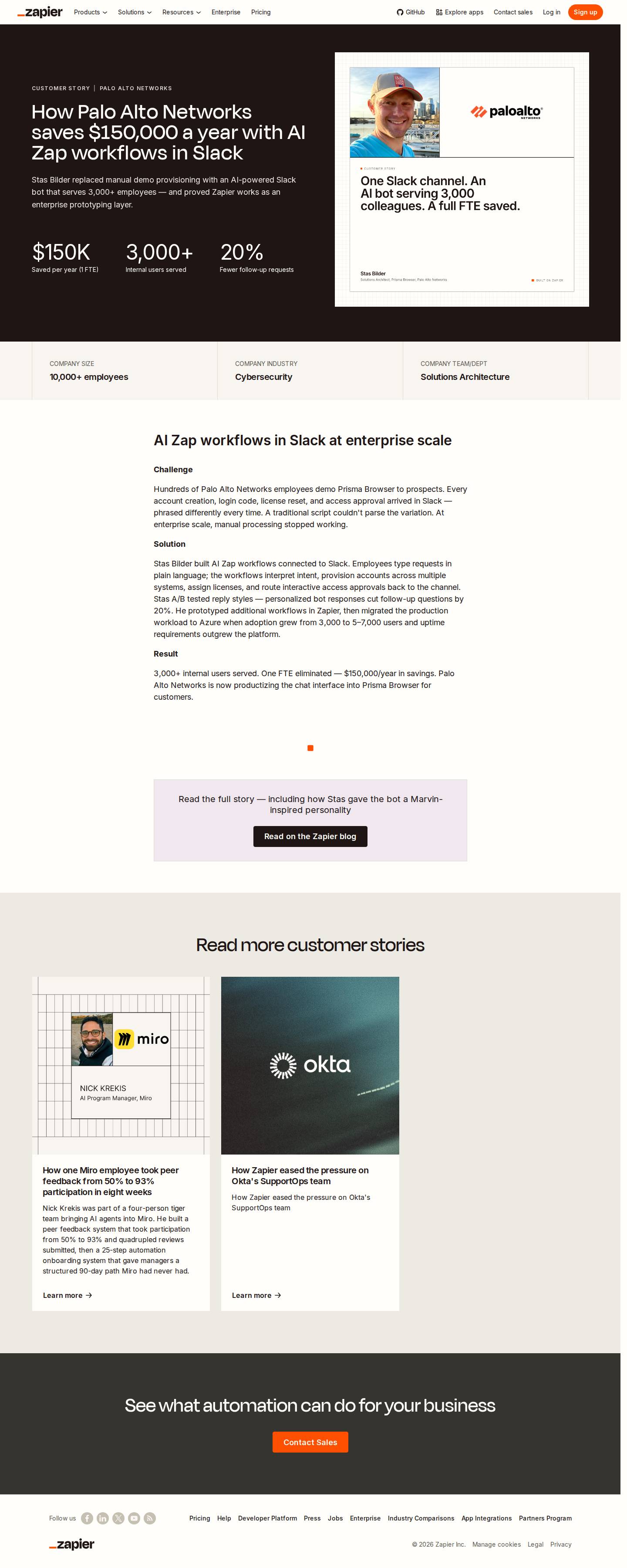 Open source capture
What the story claims, and what we checked
What we compared with the page.
- The figure: $150,000/yearChecked
Printed word for word on the page, near the name of Palo Alto Networks.
- The passage quoted aboveChecked
Copied word for word from the page, near the name of Palo Alto Networks.
- Palo Alto Networks uses ZapierChecked
Confirmed line.
- The result itselfNot checked
We quote it; we did not measure it.
Stas Bilder built AI Zap workflows connected to Slack. Employees type requests in plain language; the workflows interpret intent, provision accounts across multiple systems, assign licenses, and route interactive access approvals back to the channel.