

The use case: how Twilio deploys Harness
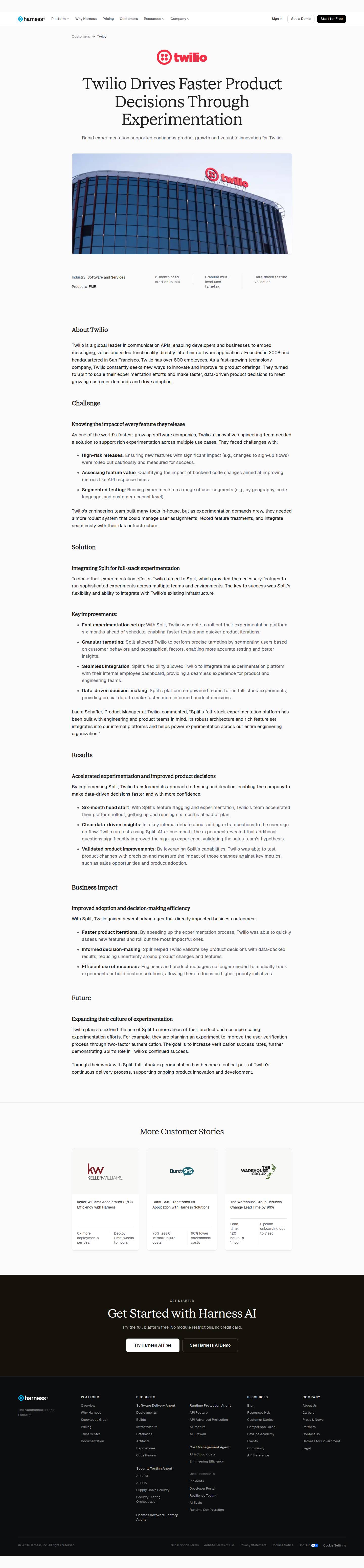
Twilio uses Split (now Harness FME) for feature flagging and full-stack experimentation, running tests on product changes such as sign-up flow updates and backend improvements, with targeting by user segments like geography and account level.
In the customer’s words
Split’s full-stack experimentation platform has been built with engineering and product teams in mind. Its robust architecture and rich feature set integrates into our internal platforms and helps power experimentation across our entire engineering organization.Other AI tools used by Twilio
Other public relationships recorded on usedby.
Explore Twilio’s AI stack





Harness users in Telecommunications
Companies in the same sector, with public evidence.
See all Harness customers
Go straight to the source
Based on Harness’s published case study. We check the public evidence; the results are reported by the vendor.
harness.io- Source published
- Aug 5, 2026
- Last checked
- Nov 11, 2026
 Open source capture
What the story claims, and what we checked
What we compared with the page.
- The figure: six monthsChecked
Printed word for word on the page, near the name of Twilio.
- The passage quoted aboveChecked
Copied word for word from the page, near the name of Twilio.
- The publication dateChecked
Read from the page’s own metadata, never guessed.
- Twilio uses HarnessChecked
Confirmed line.
- The result itselfNot checked
We quote it; we did not measure it.
Six-month head start: With Split’s feature flagging and experimentation, Twilio’s team accelerated their platform rollout, getting up and running six months ahead of plan.