

The use case: how T-Mobile deploys Zip
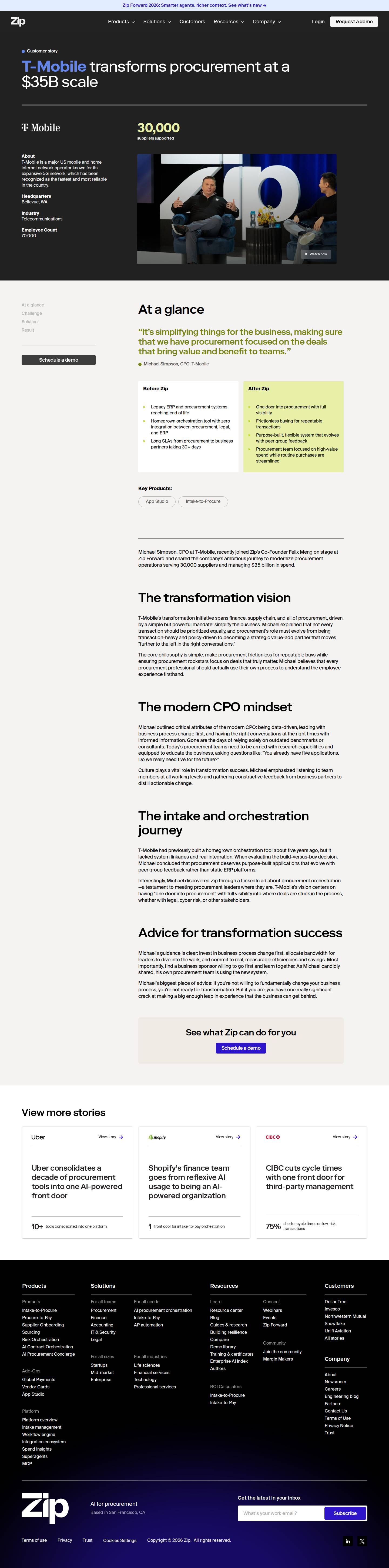
T-Mobile uses Zip's intake and orchestration platform to replace a homegrown orchestration tool and legacy procurement systems. The goal is a single entry point into procurement with full visibility into where deals are stuck, so procurement can focus on high-value deals while routine purchases are streamlined.
In the customer’s words
It’s simplifying things for the business, making sure that we have procurement focused on the deals that bring value and benefit to teams.Other AI tools used by T-Mobile
Other public relationships recorded on usedby.
 RasaConfirmed
 SmartlyConfirmed
 AmplitudeObserved
 BloomreachObserved
 DialpadObserved
 Docusign eSignatureObserved
Other companies using Zip
Customers across industries, with public evidence.
See all Zip customers





Go straight to the source
Based on Zip’s published case study. We check the public evidence; the results are reported by the vendor.
zip.com- Last checked
- Nov 10, 2026
 Open source capture
What the story claims, and what we checked
What we compared with the page.
- The passage quoted aboveChecked
Copied word for word from the page, near the name of T-Mobile.
- T-Mobile uses ZipChecked
Confirmed line.
- The result itselfNot checked
We quote it; we did not measure it.
T-Mobile had previously built a homegrown orchestration tool about five years ago, but it lacked system linkages and real integration. When evaluating the build-versus-buy decision, Michael concluded that procurement deserves purpose-built applications that evolve with peer group feedback rather than static ERP platforms.